Stainless Steel vs Aluminum Alloy vs Iron Material, Balancing Cost and Wear ResistanceWhen sourcing
custom precision hardware parts for automotive, home appliance, electronics and industrial equipment,
material selection for metal component directly determines part lifespan, dimensional stability, surface quality and overall project cost.Engineers and global buyers often struggle to choose between stainless steel, aluminum alloy and iron materials. The wrong selection causes early failure, high cost and unqualified finished hardware components.This guide compares the wear resistance, performance, cost and application of the three metals, helping you select cost-effective
custom precision hardware parts.
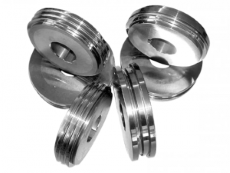
1. Core Performance Comparison: Stainless Steel vs Aluminum Alloy vs Iron Material
We compare the three mainstream metals focusing on B-end core concerns: wear resistance, hardness, corrosion resistance, weight, processing difficulty and cost.
1.1 Iron Material (Cold Rolled Steel / Hot Rolled Steel)
Iron (cold/hot rolled steel) is the most cost-effective material for mass-production standard and
custom precision hardware parts, ideal for conventional low-load industrial components.
Advantages: Lowest unit cost for mass production; excellent rigidity and stamping/CNC processability for high-precision dimensions; compatible with electroplating, spraying and electrophoresis for performance improvement.
Disadvantages: Poor rust resistance, easy oxidation in humid and acid-base environments; mediocre wear resistance, unsuitable for high-friction and high-load scenarios; heavy weight fails lightweight design needs.
Applicable Scenarios: Cost-sensitive mass-produced hardware, mechanical structural parts, home appliance internal fixings, non-exposed stamping
custom precision hardware parts.
1.2 Aluminum Alloy (6061 / 6063 / 7075 mainstream models)
Aluminum alloy (6061/6063/7075) is a mainstream lightweight material, widely used in electronics, new energy and aerospace for high-end lightweight custom metal components.
Advantages: Ultra-light weight (1/3 of steel); great ductility for complex CNC and bending processing; natural oxidation resistance, with improved hardness and corrosion resistance after anodizing and sandblasting.
Disadvantages: Lower hardness and wear resistance than steel, easy to scratch and deform under long-term friction and pressure; higher material and processing cost than iron.
Effective
material selection for metal component always balances actual working conditions, performance requirements, and budget. Iron material is optimal for low-cost mass production, aluminum alloy suits lightweight high-end products, and stainless steel is the best choice for wear-resistant and corrosion-resistant precision hardware projects.
If you have customized drawings or specific performance standards, our team can provide one-stop
custom precision hardware parts solutions, including professional material recommendation, mold design, and precision processing services to meet your project requirements.

 order online now !
  call us now !

 Zhugang Road 4, Changan town, Dongguan city, Guangdong Province, China
 +86-769-8226 2162
 +86-769-8188 6975
