
 order online now !
  call us now !
 Blog
Categories
latest blog
Tags
precision metal stamping & tooling for the AI industry
When we talk about Artificial Intelligence, the conversation usually revolves around chips, algorithms, and data. However, the physical backbone that supports this digital revolution is made of cold, hard metal. Every AI server rack, every high-voltage power module, and every humanoid robot relies heavily on precision metal stamping parts and the tooling that produces them.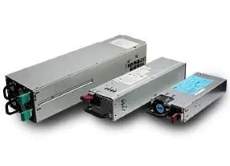
In the AI industry, the most common stamped parts are found in power supply units (PSUs) and server chassis. Take the Copper Busbar as an example. These thick, flat pieces of copper distribute massive amounts of current to GPUs. They are not simply cut; they are precision-stamped to ensure perfect alignment with insulation layers and screw holes. Even a 0.1mm deviation can lead to installation failure or dangerous overheating.
Another critical component is the EMI Shielding Cover. AI servers generate intense electromagnetic noise. Thin stainless steel shields (usually SUS304) are stamped at high speed to wrap sensitive circuits. These parts require extremely sharp die edges to maintain flatness and prevent interference with neighboring components.
The quality of a stamped part is determined long before the first piece is run. It starts in the progressive stamping die. For AI hardware, molds must be built to extreme tolerances. We utilize high-grade SKD11 or DC53 die steel and employ grinding technology accurate to 0.001mm.
Unlike standard stamping, AI components often require fine blanking. This is a specialized process that creates parts with smooth, sheared edges without any burrs. For structural brackets inside humanoid robots or battery terminals, this smooth edge is vital for safety and assembly efficiency. There is no room for secondary deburring; the mold must get it right the first time.
Selecting the right material is half the battle. For high-current applications like server power distribution, C1100 Oxygen-Free Copper is the gold standard. For lightweight robot frames, 5052 Aluminum offers the best strength-to-weight ratio. The mold design must account for each material’s unique spring-back characteristics to ensure the final part meets spec.
As AI hardware continues to evolve, the demand for smaller, stronger, and more precise metal parts will only grow. Partnering with a supplier who understands both metal stamping and tooling engineering is the smartest move for any AI hardware brand.

 Zhugang Road 4, Changan town, Dongguan city, Guangdong Province, China
 +86-769-8226 2162
 +86-769-8188 6975

